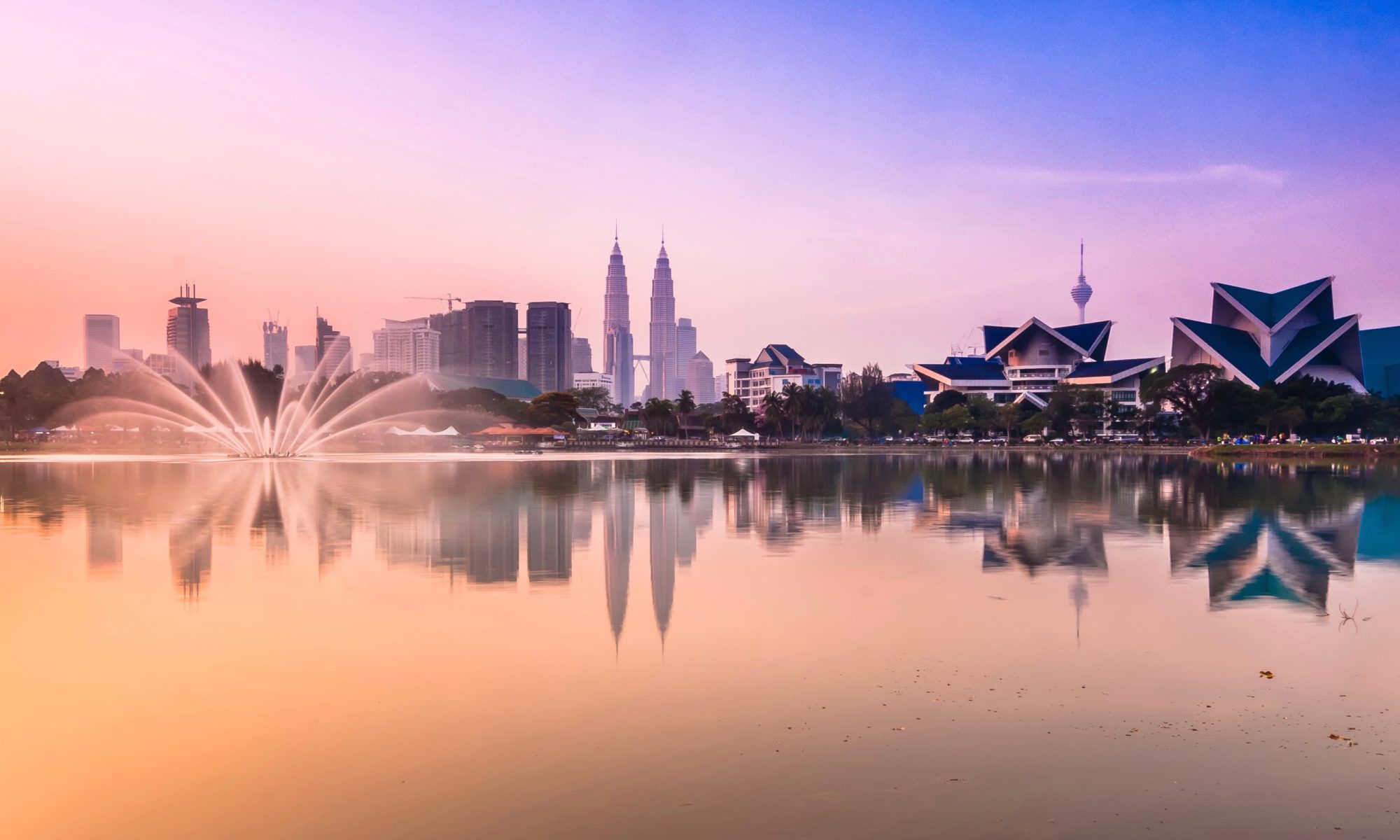
Pada wajah ufuk jingga itu aku pahatkan
Suatu doa kudus yang sarat dengan harapan
Aka ikrarkan padaMu wahai Rabbul Jalal
Betapa rasa syukur ini membuak tebal
Telah Kau kurniakan semua kesenangan ini
Yang selama ini aku terima tanpa banyak rasa peduli
Menginsafi - terpacullah kalimah alhamdulillah
Membisikkan rafak sembah dalam nafas lelah -
Kalau mungkin ini kali penghabisan akhir
Pada rona mataku ufuk jingga ini terzahir
Kau ambillah nyawa ini dengan tulus cermat
Aku pasrah mangkat mengharap rahmat.
On Prophetic Leadership
One of my favourites parts of the Quran (and there are a few), is the stories of the prophets in Surah as-Shu’ara, when various prophets – Nuh, Hud, Salih, Lut, Shu’aib – were sent to their peoples, with the mission to call their communities to the obedience of God. Each of their respective peoples suffer from some distinctive sin – be it idolatry, or vanity, or greed, or lust – and it is the mission of the respective prophets to call to their people, to lead them away from their waywardness and to guide them back unto His Path.
There is a beautiful symmetry in each story of the prophets, particularly in the call they make to their people:
“Will you not fear Allah?
I am truly a trustworthy messenger to you.
So fear Allah, and obey me.
I do not ask you for any reward for this message. My reward is only from the Lord of all worlds.”
For every prophet, there is a resonance in the message that they bring to their respective people. This refrain, in the call to God and in the refusal for reward, marks to my mind a code for what could be termed Prophetic Leadership, which is:
The Goal is Taqwa – Fear of God, or God-consciousness. For each of the peoples that have been sent a prophet, the remedy to their immorality and depravity is to return to a constant state of being aware of His Majesty and His Power. What we now think of “mindfulness” cannot be shorn from the divine nature of Taqwa – it is not enough to be merely mindful, but what will truly save us as individuals and as a community is constant and vigilant awareness and consciousness of His Mercy and His Compassion.
The important of Trustworthiness. More than anything, for a messenger to be taken as credible by the people he calls to, is for that messenger to be trusted by his people. Modern concepts of leadership often tolerates immorality as well as amorality: many of us accept and even expect poor behaviour from our leaders, and often the leaders themselves come to believe that they are above “common” norms of conduct, or even above the law. And especially at the international stage, it is regarded as naive to believe that there is any other more important goal for a state than its own self-interest. But we have seen, throughout history as well as in literature, how human communities need trust more than anything to bind people together. The idea of moral leadership may sometimes be seen as naive, today, but only because we have allowed poor leaders to lower the bar for what society expects from its leaders. More recently, banking crises have erupted over the loss of trust amongst depositors – indeed, trust is at the centre, the vital commodity – not only of our system of banking and credit, but the very core of our humanity.
Obedience to the Leader is founded on God. It is important to note here that in the prophetic approach to leadership, the concept is not founded on some mystical idea of a leader’s greatness, or some consensual acceptance of the leader’s intelligence or strength or cunning – rather, the proper foundation of obedience is that very goal of human existence: the fear and consciousness of God. For the prophets, leadership is a contract with the Divine: “I obey you for as long as you call for the fear of God, and for as long as your conduct is in line with that very fear of God.” There is no place for the dictator or the despot in the Muslim conception of leadership. Obedience is necessary for cohesion and unity in the community, but that very obedience is marshalled in the cause of God, and for nothing and no one else.
The leader does not ask for any reward other than from Him. Amongst the Malay community today, there is a tacit acceptance, a dubious social contract: “I will tolerate the corrupt leader, for as long as the corrupt leader showers me and my community with assistance.” We shrug our shoulders when we are told that our leaders are enriching themselves at the public expense, and we take it for granted that a leader would naturally surround himself with fancy cars and big houses and women. But the prophet as leader does not ask for any earthly reward. Muhammad himself, from all reliable narrations, lived a life of relative poverty, mending his own clothes, helping his wife with domestic chores. Sadly today, even those who profess to walk in his path, who claim the name of Islam in the service of their politics, have done away with Muhammad’s life and example in the conduct of their own daily lives.
It is certainly a truism through the ages, that it is much easier to claim that one is on the path of jihad, to claim to be a defender and fighter for the cause of Islam and in the name of God. It is much harder to actually walk the path of the prophets, to walk the path of Muhammad himself and how he led others and himself. It is much harder to lead as the prophets did: with utter devotion to His cause, in fear of Him, in adoration of His Mercy and His Compassion, to evince Trust in one’s behaviour and conduct, and to seek no reward except for His Forgiveness.
It is a difficult and arduous path – a lifetime of obedience to God and self-sacrifice. How many of us today are willing to take up that cause?
Tentang Rerautan Wajahmu
Pada rerautan wajahmu itu
Terukir seribu penderitaan
Seumur dirundung pencelaan
Suatu penyeksaan yang jitu
Setiap garis terpahat kemas
Mencatat setiap penghinaan
“Apakah aku yang kekurangan?” -
ratib sang jiwa yang lemas
Sedu sedan kau redamkan
Berbuku dalam cembul sunyi
Tersekam nyalaan mahangeri
“Aku bukan milikmu lagi.”
On This Ramadan Evening (Thoughts on the 20th of Ramadan)
As I am writing this, it is the 20th night of Ramadan, and I have just completed my Tarawih prayers for the evening.
“Would you say this is the best Ramadan you’ve ever had, yang?” Kat looked up at me, asking casually.
I thought about that question, and I am compelled to answer: Yes. I am not sure if this is the best ever, but certainly the best Ramadan that I can remember in years. I am keeping to the Tarawih prayers, every night, mostly at home. I have been keeping pace with my Quran recitation, and I feel calmer than I have felt in a long, long time.
The Quran recitation, I think, has a lot to do with the latter. This year, like most of the Ramadans I can remember over the past decade or so, I made the promise to myself that I would try to recite the Quran in full – to khatam the entire Book by the end of Ramadan. And most years, I would keep pace for maybe the first week, before the full blast of work deadlines and buka puasa invites and moreh gatherings would derail me by around the second week of the fasting month.
This year so far, Alhamdulillah, it has been good. It is the night of the 20th, and I am halfway through the 24th juz of the Quran. And more than just the momentum – I feel a serenity and a palpable sense of flow these nights of Ramadan as I recite the Quran. My Arabic is barely serviceable, but I know enough to make a guess of what it is I am reading – but even when I don’t, the very act of reciting the Quran fills me with a sense of wonder and grace.
As I recite each verse, I feel myself almost floating on a breeze, my tone rising and dipping and rising again to a crescendo as I reach the end of this verse, or at the start of that other verse. At times, my recitation feels like a horse at a brisk gallop, my enunciation almost breathlessly trying to keep up with flow of His Words. At other times, I whisper the words in a low hush, just luxuriating in the melody of the words, many of which sometimes I can barely understand, with my rudimentary command of the language. Sometimes, I hear myself reading the words and I try to imagine how it must have been for the earliest Muslims, to hear this strange music and to know, in their heart of hearts, that what they were hearing was something truly Eternal.
Every year, I am told that we are supposed to make the best of the final ten nights of Ramadan – a final coup de grace to this most revered of months. I am seeing now, though dimly as if through a haze, that feeling of bittersweet embrace, knowing that I am here in the final ten nights and that the sands of Ramadan will soon run out, not to return for another year. InshaAllah, the hope is to make the most of it, before Ramadan comes to an end.
Tentang Sandaran
Rebahkan dirimu di bahuku, sayang
Biar aku lebarkan
Sehampar kerendangan
Menjadi teduhan jiwa yang termalang.
Usah dikenang-kenang yang telah lalu
Akan aku sekakan
Demi satu untaian
Derai genang tangis yang jatuh meluru.
Sandarkanlah hidup dan harapmu, sayang
Segala kegalauan
Akan aku usirkan
Agar mekar hidupmu tiada berbayang.
On Things I Like and Dislike, Part II
(With apologies, yet again, to Susan Sontag)
Things I like: New York Times’ Spelling Bee. Nina Simone. Swimming. Soto ayam. Praying at the Rawdhah. The Verve. Kampung Boy. Mishary Rashid al-Afaasi. Wayang kulit. P Ramlee. Cellos. The smell of coffee in the morning. Tekken. Sunlight. Taylor Swift. Elton John. Spock. New Labour. Tun Dr. Ismail. Isaac Asimov’s Foundation. Matt Damon. The Boston Red Sox. Drinking water. Snoop Dogg. Michelle Yeoh. John Mayer. Angkor Wat. Public parades. The colour blue. Benedict Cumberbatch. Bruno Mars. Taipei. Having my hair washed. Rihanna. The azan. The West Wing. Masjidil Haram. Anderson Paak. Robotech cartoons. Port Dickson. Dean Acheson. Gregory Porter. Nasi padang. John Wick. Gin rummy. Halal. Going to bookstores. Christopher Nolan movies. Karipap. Vetiver. U2. Friends from the office. Lat. Nasi lemak Tanglin. Serial.
Things I dislike: Taugeh. Silk. Rudolph Giuliani. Ismail Sabri. Burberry. Madonna. Boris Johnson. Cherry Coke. Late-era Coldplay. That groggy feeling you get after napping during the day. Mussolini. Akon. Sarah Palin. Fagin. Ferdinand Marcos. 1Utama. James Joyce. Taking minutes in meetings. Nigel Farage. Conditional love. Arresting people for not fasting in Ramadan. American healthcare. Military coups. Henry Kissinger. Desperate Housewives. Bacon. Genting. Elon Musk. Twilight. Boyzone. Restaurants that insist on seating you right next to a storm drain. Flyover intersections on the highway. Americans calling their sports championship game “The World Series” as if the rest of the world does not exist or matter. Property developers. Tabloid stories about crumbling marriages. The New York subway. Liverpool Football Club.
Things I like: Iago in Disney’s Aladdin. Father John Misty. BFM. Josiah Bartlet. Michael Jordan. Ella Fitzgerald. Eslite. Tokyo. Reciting the Quran in Masjid Nabawi. Iron and Wine’s Passing Afternoon. Tony Blair (in 1997). Travis. Street food in Penang. Bill Clinton. Arthur C Clarke. Alec Guinness. The Singapore MRT. Pep Guardiola. Radiohead. Yam croquettes. Kinokuniya. Jeff Buckley’s cover of Leonard Cohen’s Hallelujah. Conrad’s Nostromo. Full Metal Solid on Playstation 2. Cotton. Bung Karno. Shakespeare. Kyoto. Autumn leaves. Mat Som. Nasi lemak Village Park. Ariana Grande. Ripley in Alien. John Donne. Prince of Persia. J. R. R. Tolkien. Roald Dahl’s B.F.G. That new car smell. Elizabeth Warren. Orange juice. The Tube in London. Generative Artificial Intelligence. The Boston Celtics. Donny Hathaway. Wordle. Bangkok. Harry Styles.
Things I dislike: Iago in Othello. Ted Cruz. Rosmah Mansor. Tinder. Propaganda. People who put billionaires up on a pedestal. 50 Shades of Grey. Cameron Highlands during school holidays. George W Bush. Branded goods. KLIA aerotrain. The Adjudicator in John Wick. Concrete. Vincent Tan. American obsession with guns. Hypocrisy. Crazy girlfriends. Hadi Awang. Homelessness in cities. Fox News. Dating. Boomers. Narendra Modi. Bailouts for bankers. Demolishing people’s homes in order to build urban highways. Grab. Capital punishment. Jakarta traffic. Modern “abstract” Malaysian batik. Dato’ Seri Vida. Manchester City Football Club. SS2. Miley Cyrus. Jose Mourinho. Newt Gingrich. Harry Maguire. Haggis. Regressive consumption taxes. Synthetic fibres. Profile carriers. Crawling up to kings in coronation ceremonies.
On Mercy and Compassion
During Ramadan, I think a lot about how, of all His Ninety-Nine Names that He has claimed for Himself, it is The Merciful and The Compassionate that takes centre stage.
Ar Rahman. Ar Rahim.
Almost every chapter in the Quran would be prefaced with Bismillahirrahmanirrahim – In the Name of Allah, the Most Merciful and the Most Compassionate.
Given how so many of our religious functionaries can spew fire and brimstone over His Justice and His Punishment, it is curious that it is Mercy and Compassion that is central to the Muslim conception of God. The satanic desire to elevate oneself, to inflate one’s ego – I was made out of fire, unlike that other puny creature made merely out of clay – can often lead to a sense of misplaced grandeur, and has certainly led many to believe, probably erroneiously, that they speak with His authority.
If the Christian God is said to privilege Love, then the Muslim God puts the relationship between the Creator and the human in its proper place: the makhluq are humble creatures who depend on Him for everything: for our wealth, for our success, for every breath of air that we take. We need His Mercy and His Compassion for our survival, for our very existence.
I believe that by putting Mercy and Compassion at the very centre of Muslim ritual and practice, God is modeling the way for us to exist in our own everyday life and in our dealings with our fellow humans. Prioritise mercy and compassion with your loved ones, with the ones you meet in your everyday.
If Mercy and Compassion are at the heart of the nature of the Divine, then by being merciful and compassionate ourselves, we too can strive to touch the Divine in everything that we do, and everything that we are.
Tentang Melayu, 2023
(dengan pohonan maaf buat arwah Tongkat Warrant)
Melayu itu orang yang bijaksana,
Nakalnya beriring senyum,
Budi bahasa berbunga kuntum,
Kurang ajarnya tetap hormat,
Tutur kata tersusun cermat.
Tapi Melayu kini sudah mula berubah:
Bila menipu tak tau malu,
Bila menyakau berbilion disapu,
Bila mengampu lebat berkipas,
Taat pada bos tiada berbatas.
Tetap berani walau bersalah,
Walau ranap cembul khazanah,
Sudah jadi adat,
lidah menipu ligat.
Melayu di tanah Semenanjung luas maknanya:
Jawa itu Melayu,
Bugis itu Melayu,
Keturunan Nusantara adalah Melayu.
Sekarang ini taikun itu Melayu,
Peguam itu Melayu,
Akauntan itu Melayu,
CEO itu Melayu.
Tapi sayangnya,
Yang menunggang agama itu juga Melayu,
Yang memberi rasuah, Melayu,
Yang makan rasuah, memang ramai Melayu,
Yang sakau duit rakyat itu Melayu,
Tapi masih tergamak mengaku
kununnya dialah pembela Melayu.
Dalam sejarahnya,
Melayu itu pengembara berani,
Melawan penjajah demi pertiwi,
Melorongkan jalur bangsa merdeka,
Mentadbir negara adil saksama.
Namun sayangnya,
Begitu luas khazanah negara,
Dijarah disakau pengkhianat bangsa.
Melayu itu kaya falsafahnya,
Kias kata pepatah lama,
Tapi sayangnya,
Akalbudi pupus dibedal,
Kuasa menang melawan akal.
Melayu sekarang kuat bersorak,
Bangga rezeki Tiktok secupak,
Sedangkan kampung lama tergadai,
Sawah ladang tinggal tersadai,
Tali di tangan mudah dibuang,
Timba yang ada diberi orang,
Dengan harga seguni Birkin,
Amanah rakyat dibuat main.
Melayu itu masih bermimpi,
Walaupun sudah mengenal Harvard, LSE,
Sanggup merompak bangsa sendiri,
Berkelahi cara UMNO,
"Ready to fight" jadi laungan,
Tapi tak sanggup bertarunglawan,
Marahnya dengan diam,
Musuh dibidik dengan meriam,
Menangnya cara kasar,
Ghanimah cita sebenar.
Melayu asalnya menolak permusuhan,
Tapi Melayu hari ini tiada sempadan,
Kalau menang, menang terpaling,
Kalau kalah, ke lubang cacing.
Maruah dan agama jadi tunggangan,
Berlumba demi mencari gelaran,
Alphardnya hitam berkilat,
Lencana kereta mempamer pangkat,
Banglo besar di Bukit Jelutong,
Hidupnya berkiblat laba dan untung.
Baiknya hati Melayu itu tak terbandingkan,
Semua ujaran Presiden patuh diturutkan,
Sehingga tercipta sebuah kiasan:
"Nak hidup, bos!"
Bagaimanakah Melayu abad kedua puluh satu,
Masihkah sanggup asyik tertipu?
Jika yakin kuasa Ilahi,
Usah penyamun dijulangtinggi,
Jika percaya kepada keadilan,
Jangan malu perjuang kebenaran.
Jadilah bangsa bijak dan gagah,
Tolak penghasut tolak perasuah,
Peganglah erat talian Allah,
Jadilah tuan negara bermaruah.
Tentang Jalur Gemilang
Jalur merah putih itu,
Berselang seli menyulam darah dan keringat,
Memaksa sebangsa agar tekun mengingat
Pengorbanan dulu.
Medan biru melaut,
Kanton megah yang terhampar aman,
Lambang hikmah sebuah kebangsaan,
Padamu kami berpaut.
Sabit dan bintang,
Kuning payungan gemilang daulat,
Setianya kami teguh tiada bersyarat,
Selamanya dijulang.
On First and Third Worlds
It was a typical balmy KL afternoon as we were driving towards Mid Valley. The sky was clouded over, and there was a faint promise of rain. As I was steering the car gently towards the basement parking entrance of the Gardens mall, the entrance booth slowly came into view. I did the usual instinctive thing, reaching out to the console on the car’s dashboard where I normally keep my Touch ‘n’ Go card. Just as I was about to lift the card out of its faux-leather sleeve, I noticed, at a glimpse from the corner of my eye, that the parking terminal accepted not only the usual cashless payment of Touch ‘n’ Go, but would also accept credit card payments, including MyDebit, with its distinctive Wifi-looking logo.
“Eh. Can pay with credit card now. I wonder if I can use Apple Pay for parking here.”
“Ooh,” Kat replied. “Try lah.” My wife knew me too well enough by now to know two things. One: I hate unfair and inefficient monopolies on public services, with a level of detestation that Kat herself would normally reserve for cat torturers. Two: ever since I was able to use Apple Pay on my iPhone, I have been constantly delighted at the ability to merely double-press a button, look at my phone to unlock the Apple Pay pay option, and then simply swipe my phone over a terminal to effect payment – my favourite First World-level dopamine shot.
I tried it – and voila, it worked! There I was, happily steering my car past the parking entrance booth with a big smile on my face. Never fails.
Anyways, some minutes later, I found a parking spot not too far from the lobby entrance (another pet habit of mine, the pursuit of which can sometimes drive Kat out of her mind), and as we were heading up the escalators and found ourselves walking past the shops on the lower ground level, a sudden thought came to my mind:
“Alamak! Now I remember: the last time I used Apple Pay to enter a parking lot, I couldn’t exit. This silly building in Bangi hadn’t updated its parking system, and so I could enter the parking with Apple Pay, but the parking terminal couldn’t recognise my Apple Pay when exiting. Hmm. I wonder if I might get stuck when we exit later.”
“Oh well,” Kat said, as she normally would when entertaining my sudden bouts of petty anxiety. “If we can’t exit nanti, you just hit the intercom and ask for help, lah. You’ll be that guy, but it won’t be the end of the world.”
“Hmm, okay.” I shelved the thought away from my mind, and for the next two hours, I didn’t think much of it: the movie turned out to be much more entertaining than I had expected, and by the final joke at the end of the movie credits, the entire hall erupted in whoops of delighted laughter.
“Good movie, huh?? Jarnathan hahah!!!” I was beaming.
“Yeah!” Kat grinned. We fell into talking about our favourite parts of the movie, excitedly. It was a good afternoon.
We did some errands at the pharmacy and the supermarket, and then it was time to head back home. As we got into the car, and I was driving towards the exit, I remembered again with distaste that there was a possibility that I might not be able to easily exit. What I was really anxious about, typically, was that getting stuck at the parking exit would delay others behind me whose lives would be unduely disrupted by something I had committed. The dictum of hidup jangan menyusahkan orang was something I held very closely to heart, and I was happy always to lambast those who would break it. Now it could well be my turn to menyusahkan hidup orang.
As the parking exit booth loomed closer, I slowed down the car to a halt, and pressed the button on my right to roll down the window. (Remember those days when you had to actually wind a crank to bring the window down? Amazing.) I lifted my iPhone from its resting place in the centre console of the car, did the usual Open, Sesame gestures on my phone, waved the front of the phone near the parking console, and winced quietly as the seconds ticked, until –
The exit bar lifted up! It worked! In a fit of delight, I did a little whoop, pumped my fist into the air and yelled out with the car window still down: “Oh yeah! First world, baby!”
As the car eased its way past the exit booth and climbed upwards through the exit ramp into the open air, Kat couldn’t resist: “Hmm. If Lee Kwan Yew could crow about bringing Singapore from Third World to First, I guess we can be proud that Malaysia already has First World moments while still in Third!”
Ba-dum-tishhhh.